


Full Description
About the Book
“Everywhere the sense for the holy suffered from the manifold persecutions of its previous form, its former personality. The end product of the modern manner of thinking was termed ‘philosophy,’ and under that head was reckoned everything that was opposed to the old, hence primarily every objection against religion. The initial personal hatred of the Catholic faith passed gradually over into hatred of the Bible, of the Christian faith, and finally of religion in general. Still further, the hatred of religion extended itself quite naturally and consistently to all objects of enthusiasm. It made imagination and emotion heretical, as well as morality and the love of art, the future and the past.” So writes Novalis in Christendom or Europe?.
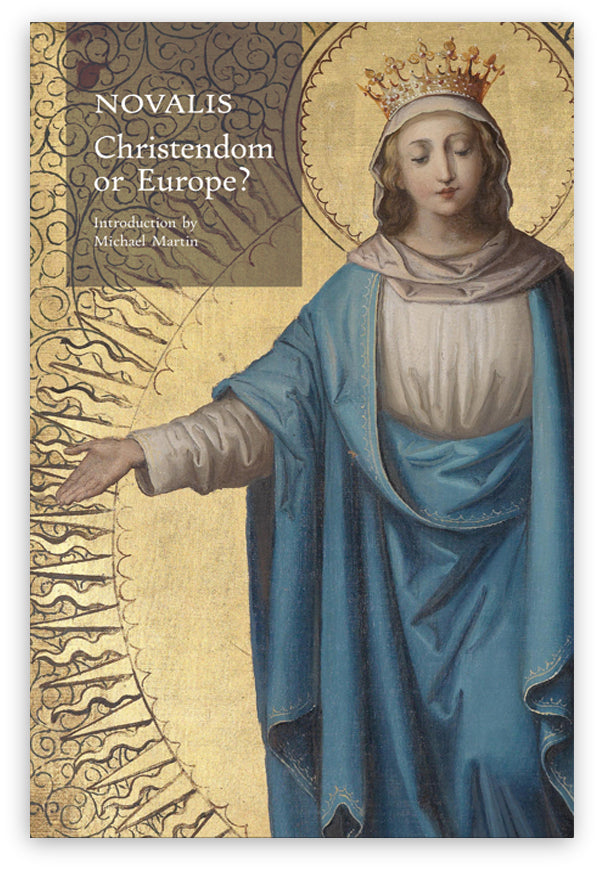
Controversial from the first time it was read to a group of his friends, Novalis’s Christendom or Europe? is a central document in Romantic Christianity, a visionary and imaginative exploration of the Christian past infused with a hope for the Christian future. This volume also includes Novalis’s Spiritual Songs and an introductory essay by poet and philosopher Michael Martin.
About the Author
